Amateur radio is many hobbies hiding inside one hobby.
You can talk with someone across town or across the world. You can experiment with electronics, antennas, computers, and digital communications. You can take a radio into the woods, communicate through satellites, build equipment, participate in contests, support community events, practice emergency communications, or simply enjoy a conversation with someone you’ve never met.
There isn’t one particular way you’re supposed to enjoy amateur radio.
That’s part of what makes it interesting.
Why Is It Called “Amateur” Radio?
In amateur radio, amateur doesn’t mean inexperienced or unskilled.
It means the radio service is used for personal, noncommercial purposes rather than as someone’s commercial communications business.
Amateur radio operators come with every imaginable level of experience. Someone may have earned a first license last week, while another operator may have spent decades experimenting with radio, electronics, antennas, computers, or communications systems.
Both are amateur radio operators.
We usually call them hams.
What Can You Actually Do With It?
That’s where amateur radio gets difficult to describe in one sentence.
Different operators can have completely different hobbies while sharing the same amateur radio license.
Talk Locally
Many new operators begin with local VHF or UHF communications.
That might mean talking directly with another station or using a repeater that receives a signal and retransmits it over a wider area.
Local radio is useful for conversations, organized nets, community activities, technical experimentation, and simply becoming comfortable operating a radio.
You don’t need to begin by trying to contact the other side of the planet.
Sometimes the person a few miles away is a perfectly good place to start.
Talk Around the World
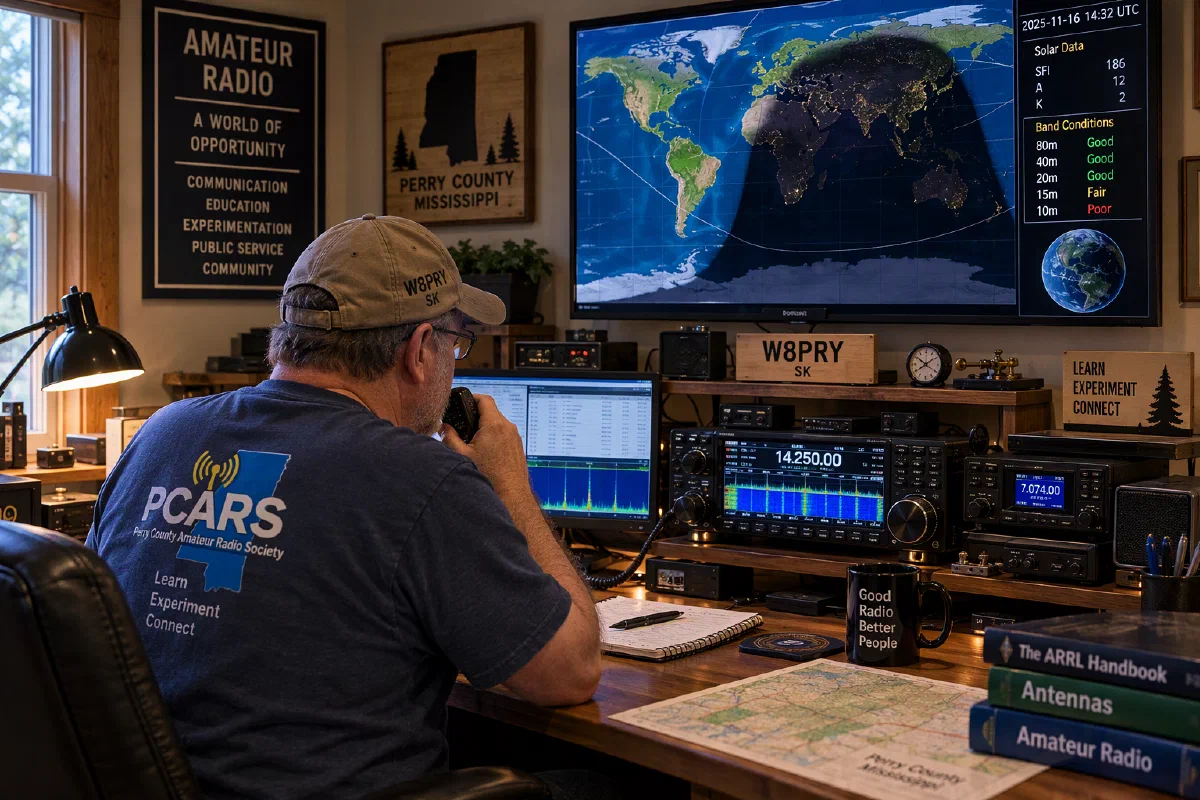
Amateur radio can also cover enormous distances without using the Internet or a cellular network.
Under the right conditions, radio signals can travel hundreds or thousands of miles.
Operators use this capability to contact other amateur stations throughout the United States and around the world.
For some people, making distant contacts becomes a lifelong part of the hobby.
For others, it’s simply one more interesting thing radio can do.
Use Voice, Data, and More
Amateur radio isn’t limited to talking into a microphone.
Depending on license privileges, equipment, frequency, and operating interests, amateur radio can involve:
- Voice communications
- Morse code
- Digital communications
- Computer-assisted operating
- Text and data
- Images
- Position and telemetry information
- Satellites
- Radio direction finding
- Experimentation with new communications techniques
You don’t have to choose one and stick with it.
It’s perfectly normal to become interested in something new because another operator showed you what was possible.
Experiment
Amateur radio has always had a strong experimental side.
You can build or modify antennas. You can explore how terrain affects signals. You can compare different radios and operating techniques. You can interface radios with computers or small electronic devices. You can study propagation and discover why yesterday’s easy contact is impossible today.
Sometimes an experiment works beautifully.
Sometimes it teaches you three different ways something doesn’t work.
Both count.
For people who like understanding how things work, amateur radio can become a very deep rabbit hole.
Take Radio Outside
Your station doesn’t have to stay on a desk at home.
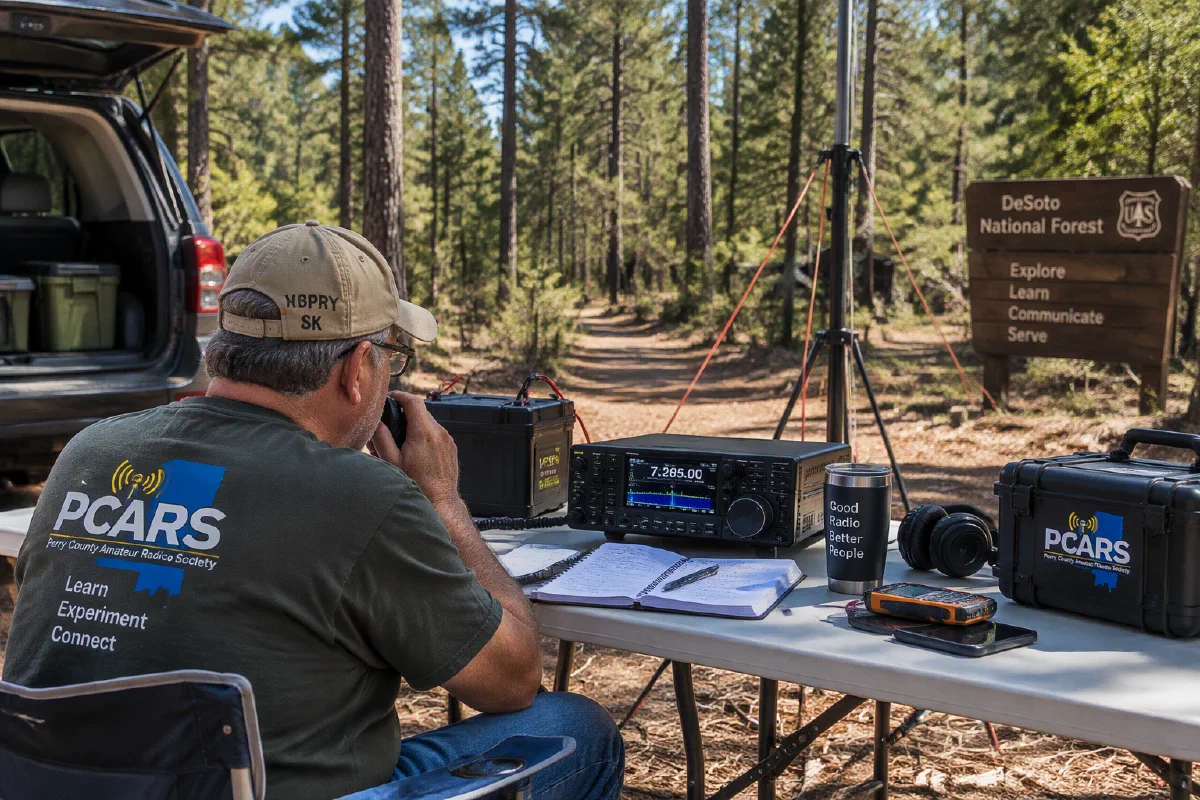
Portable operating can mean taking a small radio to a park, setting up a temporary antenna in the woods, operating from a campsite, participating in Field Day, or simply seeing what you can accomplish with equipment you can carry yourself.
Portable operation combines radio with practical problem solving.
How will you power the radio?
Where will the antenna go?
What can you hear from this location?
How far can you communicate?
What happens when the solution that worked perfectly at home doesn’t work here?
That’s part of the fun.
Learn Practical Skills
Amateur radio creates opportunities to learn about much more than radio itself.
Depending on your interests, you may find yourself learning about:
- Electronics
- Electricity
- Antennas
- Feed lines
- Batteries and power systems
- Computers
- Networking
- Digital communications
- Geography
- Weather
- Satellites
- Radio propagation
- Troubleshooting
- Soldering
- Fabrication
- Emergency communications
Nobody needs to master all of these subjects.
You learn what you need, follow what interests you, and pick up more along the way.
Be Better Prepared
Amateur radio can also become part of personal and community preparedness.
Reliable communication is a skill.
A radio sitting on a shelf may be useful equipment, but knowing how to use it effectively takes practice. Amateur radio provides an opportunity to learn what your equipment can actually do, understand its limitations, operate away from home, experiment with temporary antennas and backup power, and communicate regularly when there isn’t an emergency.
Those skills are much easier to develop when the stakes are low.
The best time to learn whether a communications plan works is before you need to depend on it.
Serve Your Community
Some amateur radio operators use their skills to support public-service activities and emergency communications.
That might include communications support for community events, weather-related activities, exercises, or organizations focused specifically on emergency communications.
Public service isn’t required to enjoy amateur radio.
But for operators who want to contribute their time and skills, radio can provide meaningful opportunities to help.
Meet People
This may be the most important part.
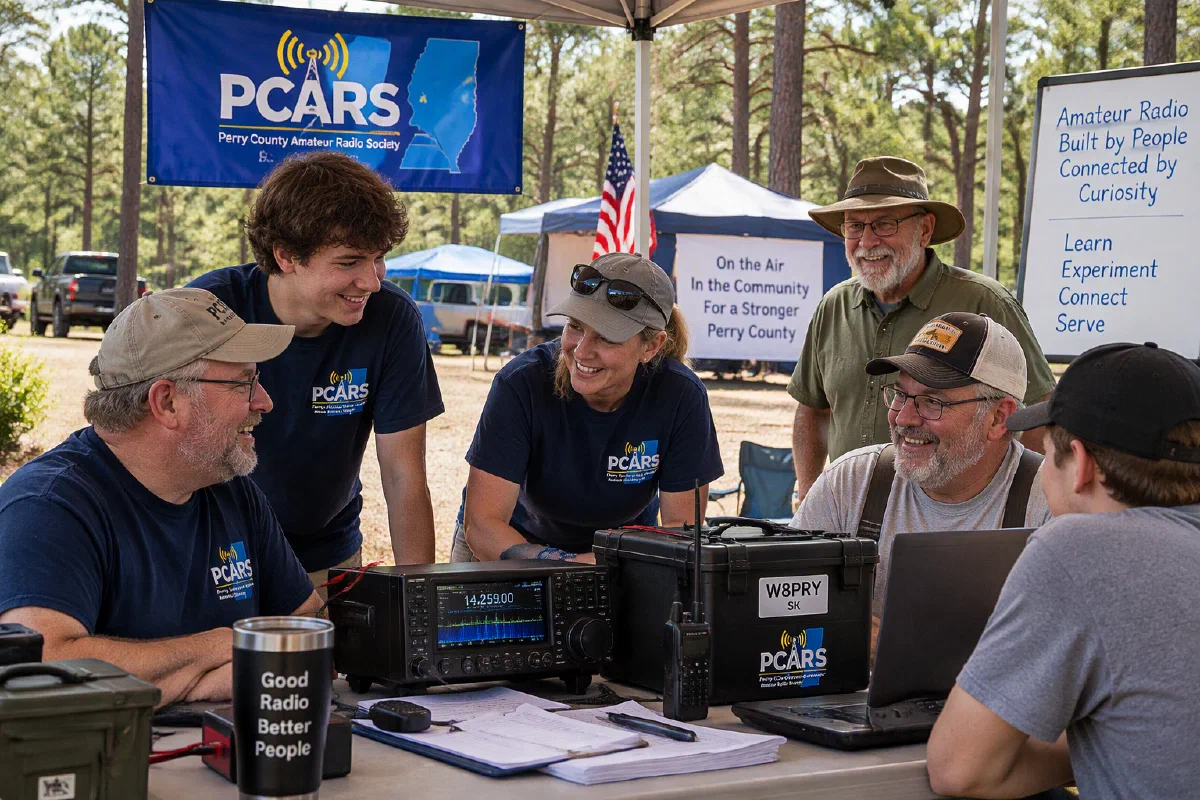
Amateur radio connects people who might otherwise never meet.
A conversation can begin because two people happen to be listening to the same frequency. An experienced operator may help someone make a first contact, troubleshoot a station, or understand an antenna problem. A club project can bring together people with completely different skills.
Radio gives us something in common.
Community is what grows around it.
Do I Need to Know Electronics?
No.
You will need to learn some basic technical and operating information to earn an amateur radio license, but you do not need an electronics background before you begin.
Many operators learn the technical side gradually because they discover that understanding a little more helps them do something they want to do.
That’s a pretty good way to learn.
Start with what interests you.
Let the questions come naturally.
Do I Need Expensive Equipment?
No.
Amateur radio stations range from simple handheld radios to elaborate home stations with multiple radios, antennas, computers, and accessories.
Don’t assume that getting started means purchasing a room full of equipment.
In fact, learning what you want to do before buying much equipment can save you money and frustration.
A radio that’s perfect for one person’s interests may be almost useless for someone else’s.
We’ll talk much more about that in Your First Radio.
Why Do I Need a License?
Amateur radio uses portions of the radio spectrum allocated for the Amateur Radio Service.
In the United States, transmitting as an amateur operator requires an appropriate FCC amateur radio license grant.
Licensing establishes that an operator has demonstrated knowledge of the rules, operating practices, safety, and technical subjects needed to operate an amateur station responsibly.
The good news is that getting started is very achievable.
You don’t need an engineering degree.
You need some study, a little curiosity, and a willingness to learn.
Is Amateur Radio Still Relevant?
Absolutely.
Modern amateur radio can involve traditional voice and Morse code, but it can also involve computers, digital communications, satellites, data, software, networking, portable power, and modern electronics.
The FCC’s rules and service structure explicitly provide for activities including repeaters, satellite stations, telemetry, data operation, and emergency communications, while amateur radio continues to provide room for technical investigation and experimentation.
At the same time, the basic idea remains remarkably simple:
Learn how radio works. Use it to communicate. Experiment. Keep learning. Help other people do the same.
That’s a pretty durable hobby.
What’s Next?
If amateur radio sounds interesting, don’t worry about choosing your lifelong specialty.
You don’t need one.
The first practical step is understanding how amateur radio licensing works.
How do I get licensed?
If you’d rather talk to someone before doing anything else, contact us at info@pcars.club.