Perry County Amateur Radio Society
Learn
Learn amateur radio your way.
Start Here
Find Your Way Into Amateur Radio
You don't have to know where amateur radio will take you. Pick a place to start and keep exploring.
What Is Amateur Radio?
Discover what amateur radio is, what people do with it, and why the hobby covers far more than talking on a radio.
Start here 02Getting Licensed
Understand the amateur radio license classes, examinations, and the basic path from curious newcomer to licensed operator.
Learn about licensing 03Choosing Study Resources
Compare books, online study tools, practice examinations, classes, and other ways to prepare without declaring one approach right for everybody.
Explore study options 04Finding an Exam Session
Learn what to expect from an amateur radio license examination and how to find opportunities to take one.
Find the next step 05Your First Radio
Think about what you want to do before spending money on equipment you may quickly outgrow.
Understand your options 06Getting On the Air
Move from having a callsign to actually using it, from repeaters and simplex to nets and your first contacts.
Make that first contact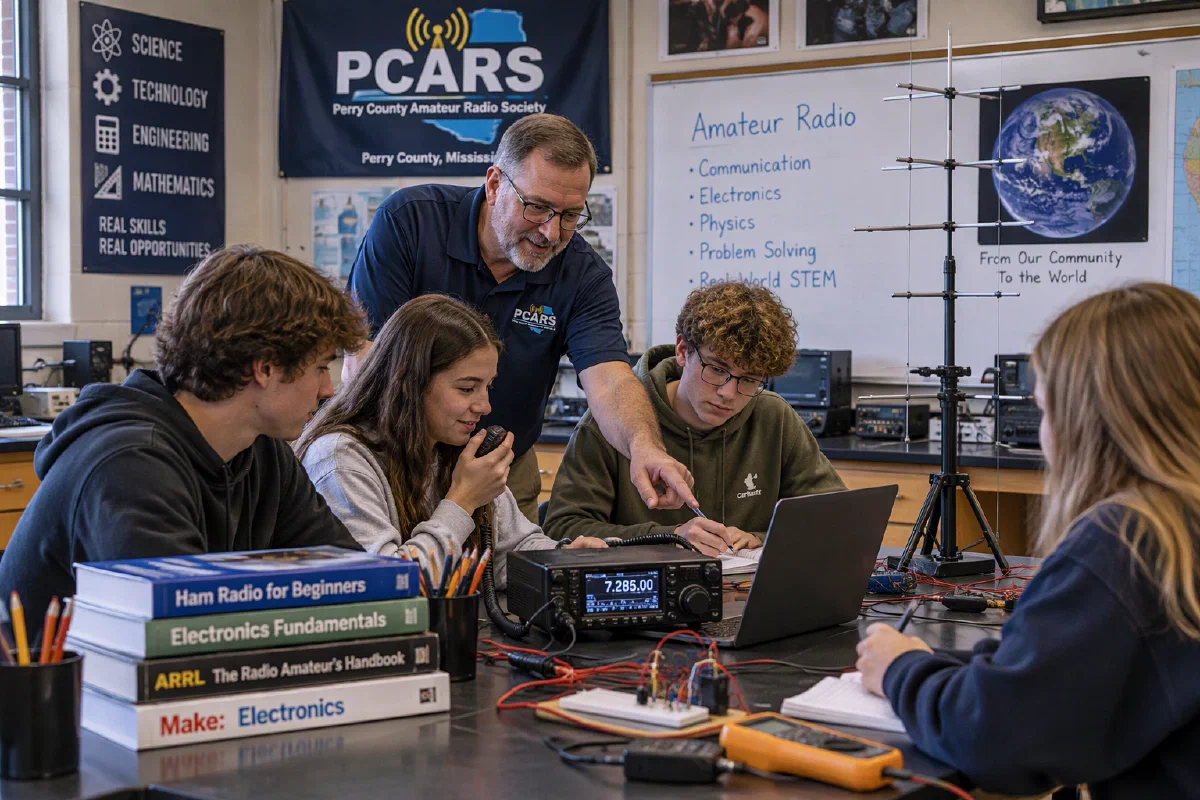
Educators & Students
Put Radio to Work in STEM
Radio and wireless technology bring physics, electronics, mathematics, computers, satellites, weather, communications, and experimentation together in something students can actually use.
PCARS would like to work with Perry County educators who want to explore amateur radio, radio science, electronics, or wireless technology with their students.
You do not need to already be an amateur radio operator to start the conversation.
Ask About Educational ResourcesLearn Your Way
There isn’t one right way to learn amateur radio.
Some people learn best from books. Others prefer online courses, videos, flash cards, practice exams, classroom instruction, hands-on experimentation, or working alongside someone who already has experience. For many of us, the best approach is a mixture of several.
PCARS isn’t here to tell you which method you should use. We want to help you find reliable resources, connect with people who can answer questions, and give you opportunities to put what you’re learning into practice.
Use what works for you. Keep learning. Help the next person.
New to Amateur Radio?
If you’re starting from the beginning, you’re in the right place.
You don’t need to own a radio, understand electronics, or know the difference between HF and VHF before you begin.
Start by learning what amateur radio is and what people actually do with it. From there, you can explore licensing, study for your first examination, and begin figuring out which parts of amateur radio interest you most.
Passing the Test Is the Beginning
Passing an examination earns you an amateur radio license.
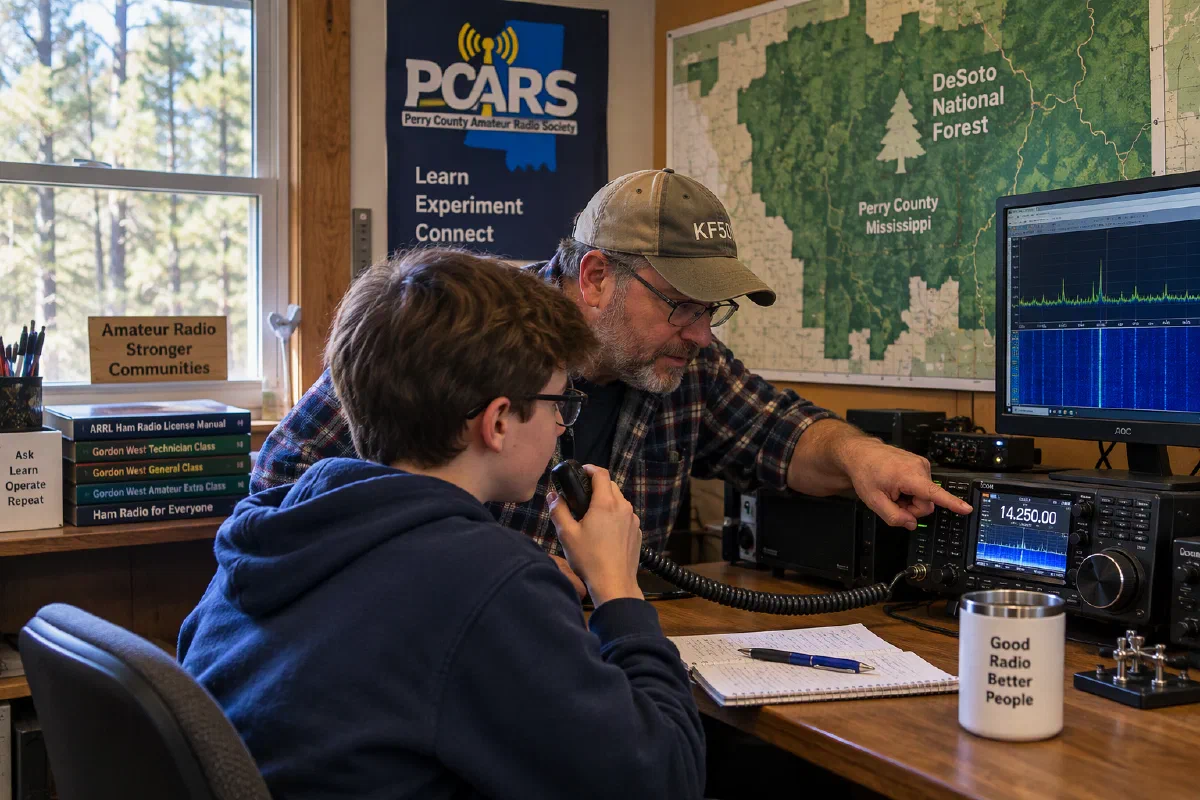
Becoming a capable radio operator happens through learning, experimenting, practicing, asking questions, making mistakes, solving problems, and sharing knowledge with other people.
Exam preparation matters, but your license is permission to begin doing things that are much more interesting than taking exams.
Once you’re licensed, get on the air.
Try things. Build something. Take a radio outside. Experiment with an antenna. Join a net. Learn another operating mode. Ask questions when something doesn’t make sense.
Then, when you learn something useful, help somebody else.
License Preparation
Different study methods work for different people, and PCARS does not endorse one particular method over another.
Before choosing a book, course, website, or other study resource, make sure the material covers the question pool currently in effect for the license examination you plan to take.
Books and Study Guides
Traditional study guides work well for people who prefer reading, structured lessons, illustrations, and the ability to work through material at their own pace.
The American Radio Relay League (ARRL) publishes amateur radio licensing and educational materials, including license-preparation resources.
Gordon West license-preparation books offer another established approach, organizing examination material by topic.
Other publishers and authors offer useful material as well.
Find an approach that works for you.
Interactive Study and Practice Exams
Online study tools can be useful for learning the examination question pools, identifying subjects that need more work, and becoming comfortable with the format of the actual examination.
Resources include:
Some resources emphasize practice examinations and flash cards. Others provide explanations, lessons, progress tracking, or combinations of these approaches.
Try more than one if that helps.
The goal is not to use the “correct” study site. The goal is to learn.
ARRL Learning Opportunities
The American Radio Relay League is the national association for amateur radio in the United States and provides educational resources for prospective, new, and experienced amateur radio operators.
ARRL resources include license instruction and study material, examination-practice resources, technical references, learning material, and resources intended to help newly licensed operators continue developing their skills.
PCARS encourages operators to explore these resources and use the material that supports their own interests and learning style.
Keep Learning After You’re Licensed
Amateur radio is much larger than the license examination.
As PCARS develops its learning resources, we want to explore subjects such as:
- Radios and station setup
- Antennas and feed lines
- HF, VHF, and UHF operating
- Repeaters and simplex
- Analog and digital modes
- Radio propagation
- Portable and field operation
- Parks on the Air
- Field Day
- Electronics
- Computers and amateur radio
- Satellites
- Weather and radio
- Radio direction finding
- Public-service communications
- Emergency and preparedness communications
- Backup power
- Station safety
- Projects and experimentation
Nobody needs to learn all of it.
Follow the parts that interest you, and don’t be surprised when one interest leads to three more.
Preparedness and Communications
Reliable communication is a skill.
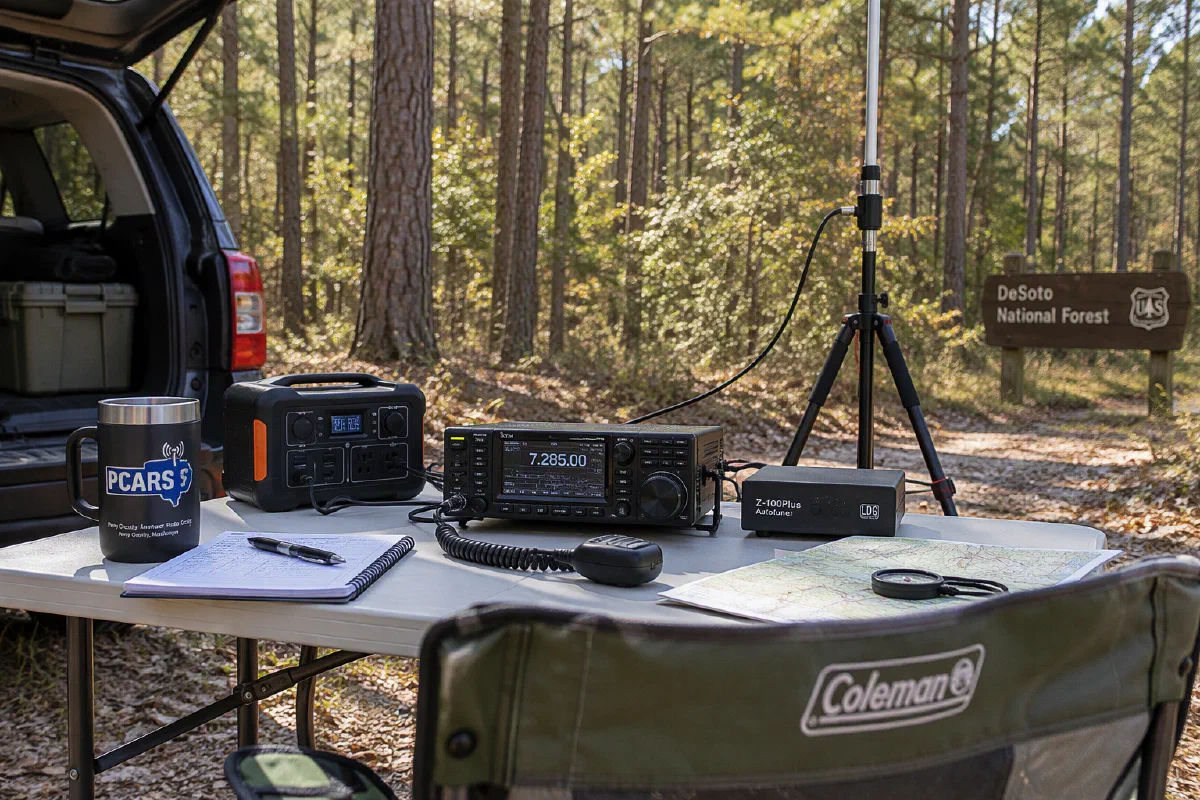
Owning radio equipment is useful, but knowing how that equipment behaves, what its limitations are, how far it can communicate, how to power it, and how to improvise when normal operating conditions change requires practice.
Amateur radio gives us an opportunity to develop those skills when the stakes are low.
Portable operation, temporary antennas, battery power, simplex communications, propagation, and regular on-air practice can all help build practical communications capability.
The best time to discover what works is before you need to depend on it.
Resources for Educators
Teachers interested in bringing radio and wireless technology into the classroom don’t have to start from scratch.
ARRL’s Education & Technology Program provides classroom resources for teachers interested in radio science and wireless technology.
ARRL also offers the Teachers Institute on Wireless Technology, a professional-development program focused on hands-on wireless technology and related STEM activities.
PCARS can help Perry County educators find these resources and, as the organization grows, we hope to provide local amateur radio knowledge and mentoring where it can be useful.
Interested educators are also welcome to contact PCARS if we can help connect a classroom, school, or youth program with amateur radio resources.
Learning Works Better Together
Books, courses, videos, websites, and practice examinations are valuable tools.
Community adds something different.
Sometimes the thing you need is another person who can look at an antenna, listen to what your radio is doing, explain something a different way, or simply say, “Let’s try it.”
That’s one of the reasons we’re building PCARS.
If you want to learn amateur radio, teach amateur radio, introduce radio to students, share something you already know, or simply explore something new, you’re welcome here.
Contact us at info@pcars.club.